
Indian battery regulation has changed repeatedly since 2022 and continues to. This guide explains what each standard is for and how the pieces fit together — that structure is stable. Specific requirements, deadlines and applicability are not, and you should confirm the current position with BIS, ARAI or your certification consultant before making a commercial decision. Where a date is given below, treat it as a prompt to check rather than as advice.
India’s battery safety framework grew in response to a run of electric two-wheeler fires in 2022, and it grew quickly. The result is a set of standards written by different bodies for different purposes that overlap in ways that confuse almost everybody, including plenty of people selling batteries.
The confusion is commercially useful to some suppliers. A certificate for a cell is presented as though it certified a pack. A test report for one configuration is offered for a different one. This guide is meant to make that harder to do to you.
The one distinction that organises everything
Indian battery standards divide along a line that is easy to state and constantly ignored in practice:
- Cell-level and battery-level product safety — is this cell, or this battery as an article of commerce, safe? Administered by the Bureau of Indian Standards (BIS) through IS standards.
- Vehicle traction battery safety — is this pack safe as part of a vehicle, in that vehicle’s use? Administered under the Central Motor Vehicles Rules through AIS standards, tested by agencies such as ARAI and ICAT.
A cell certificate says nothing about the pack built from those cells. Cells can be perfectly compliant and the pack around them can be assembled badly, protected by an inadequate BMS, and housed in an enclosure that leaks. Compliance is not transitive. If a supplier answers a question about pack certification by showing you a cell certificate, they have not answered the question.
AIS 156 — the vehicle traction standard
AIS 156 is the Automotive Industry Standard covering electric power train vehicles, and it contains the traction battery safety requirements for L-category vehicles — which is where two-wheelers, three-wheelers, e-rickshaws and e-carts sit.
If your pack propels a registrable vehicle, this is the standard that governs it. It was amended after the 2022 fires with substantially strengthened requirements, commonly referred to as the Phase 2 amendments, which added testing around thermal propagation — whether a single cell failure can cascade through the pack — along with tighter requirements on BMS behaviour, enclosure integrity and cell-level protections.
Testing under AIS 156 is destructive and covers the pack as a complete assembly. Broadly, it looks at:
| Category | What it does to the pack | What it is checking |
|---|---|---|
| Vibration | Sustained vibration profile | That road use does not loosen interconnects or chafe insulation |
| Thermal shock and cycling | Repeated temperature extremes | Seals, solder joints and enclosure integrity over temperature |
| Mechanical shock and crush | Impact and crush loads | Behaviour in a collision |
| Fire resistance | External fire exposure | That the pack does not explode when the vehicle burns |
| External short circuit | Dead short across the terminals | That protection acts fast enough |
| Overcharge and over-discharge | Deliberate abuse past limits | That the BMS intervenes and the cells survive it |
| Thermal propagation | One cell forced into runaway | Whether failure cascades to neighbouring cells |
| Water and dust ingress | Immersion and dust exposure | Real monsoon and road conditions |
The thermal propagation test is the one that changed pack design most. Designing to pass it pushes you toward chemistries with a higher runaway threshold and lower energy release — which is a substantial part of why LFP has become the default for Indian commercial vehicles, as we discuss in our chemistry comparison.
IS 16046 — cell and battery product safety
IS 16046 is the Indian adoption of IEC 62133, covering the safety of portable sealed secondary cells and the batteries made from them. It comes in parts, with Part 2 covering lithium systems.
This is the standard that speaks to the cell. It covers construction, marking, and a set of abuse tests — charging at extremes of temperature, forced discharge, external short, crush, impact, thermal abuse, overcharge — and it is administered by BIS under the Compulsory Registration Scheme, which means cells covered by it need to be registered before sale.
What IS 16046 does not tell you is whether the pack built from those cells is any good. That is the transitivity trap above, and it is the single most common misrepresentation in this market.
The other names you will be shown
| Standard | Scope | Applies to you if… |
|---|---|---|
| AIS 156 | Traction battery safety for L, M and N category vehicles | Your pack propels a registrable vehicle |
| IS 16046 (Parts 1–2) | Cell and battery product safety; BIS CRS registration | Always relevant — ask which cells and whether they are registered |
| IS 16893 (Parts 2–3) | Safety requirements for lithium traction battery systems | Traction packs; often cited alongside AIS 156 |
| IS 16047 (Part 3) | Performance and capacity verification methods | Capacity claims — requirements here have been tightening |
| AIS 038 / AIS 048 | Older EV and battery safety standards | Legacy references; largely superseded for new approvals |
| IP rating (IEC 60529) | Ingress protection — dust and water | Every outdoor or vehicle pack. IP65 is a sensible floor. |
IS 16047 Part 3 is worth flagging separately. It concerns how rated capacity is verified, which is the standards system catching up with a real and widespread problem: packs sold as 100 Ah that deliver 80. Requirements in this area have been tightening, and a supplier who can show measured capacity against a defined test method is telling you something meaningful.
Why the rules tightened, and what changed in practice
Understanding where this framework came from makes its shape much easier to read.
Through 2022 a series of electric two-wheeler fires in India — several of them in vehicles that were parked and charging, some inside homes — put battery safety on the front page. Investigations pointed repeatedly at the same cluster of causes: cells operating outside their safe window, battery management systems that were inadequate or absent, poor thermal design, and packs assembled to a price with little validation of the finished assembly.
The regulatory response targeted exactly those failures, and it changed pack design in four visible ways.
- The pack became the unit of assessment. Testing the cells was no longer sufficient; the complete assembly, including its BMS and enclosure, had to pass as a system. This is the single most important change, and the reason the cell-versus-pack question above is the first one to ask.
- Thermal propagation had to be designed for. Forcing one cell into runaway and requiring that it not cascade is a demanding test. Passing it pushes designers toward cell spacing, barriers, venting paths and chemistries with a higher runaway threshold — which is a large part of LFP’s rise in this market.
- BMS specifications stopped being optional. Requirements around cell-level monitoring, protection thresholds and behaviour under abuse meant a bare protection board could no longer carry a compliant pack.
- Capacity claims came under scrutiny. Verification methods addressed the widespread practice of selling packs that did not deliver their marked amp-hours.
The practical consequence for a buyer is that a pack designed before this shift and a pack designed after it can look identical from the outside and be substantially different inside. When you are shown a test report, the date on it is informative.
What to actually ask a supplier
Ordered by how much they reveal.
“Is this certification for the cell, or for this pack?”
The single most useful question on this page. Ask it first and watch what happens. A supplier who conflates the two either does not understand their own product or is hoping you do not.
“Which cell, by make and model number?”
Identifies the chemistry, the manufacturer and whether the cell is CRS-registered. A refusal to name the cell is a complete answer in itself.
“Can I see the test report, not the certificate?”
A certificate is a summary. The report shows what configuration was tested, at what capacity, by which laboratory, on what date. Configurations differ; a report for a 60 Ah pack does not cover a 150 Ah pack of the same voltage.
“What is the enclosure’s IP rating?”
Not a certification question exactly, but the one that most predicts whether a pack survives a monsoon. Look for IP65 or better on anything mounted on a vehicle.
“What does the warranty cover, and what voids it?”
Certification tells you a design passed a test once. A warranty tells you what the supplier will do when your specific pack fails. Ours is 36 months on lithium packs, written out in our warranty and refund policy.
When formal certification is not required — and what to do then
Not every lithium pack needs vehicle type approval. A stationary storage bank behind a solar inverter, a pack for industrial equipment, a replacement pack for a non-registrable machine — these sit outside AIS 156 entirely.
That does not make the engineering optional, and this is where a lot of poor product hides. If your application does not attract mandatory testing, specify the same things the testing would have forced:
- Named, CRS-registered cells from an identifiable manufacturer, not “A-grade imported cells”.
- A BMS with stated continuous ratings, per-cell monitoring, temperature sensing and a low-temperature charge cut-off. Our BMS guide sets out what to ask.
- An enclosure with a real IP rating, sealed cable glands and mechanical strain relief.
- Fusing appropriate to the pack’s fault current, independent of the BMS.
- Documented capacity, measured rather than asserted.
- A written warranty from an entity that will still exist in three years.
A meaningful share of cheap packs in this market use cells recovered from scrapped batteries. They may test acceptably on day one. Their remaining cycle life is unknown and their capacity spread is wide, which is precisely the condition that defeats cell balancing and kills a pack in eighteen months. No certificate covers this — it is a sourcing question, and the only defence is knowing who built the pack.
Where we stand
We have manufactured battery packs, chargers and inverters in New Delhi since 1994, and we assemble and test every pack in our own facility rather than importing finished modules. What that means practically:
- We can tell you which cells are in your pack and who made them.
- We can tell you the BMS continuous rating, its balancing current and its protection thresholds.
- We test every pack functionally before it leaves, and our quality process covers incoming materials as well as finished goods.
- Our packs carry a 36-month warranty against manufacturing defects, with the terms written down.
If your application requires formal type approval, tell us at the enquiry stage. Certification is specific to a tested configuration, and it is far cheaper to design a pack around the requirement than to discover it afterwards.
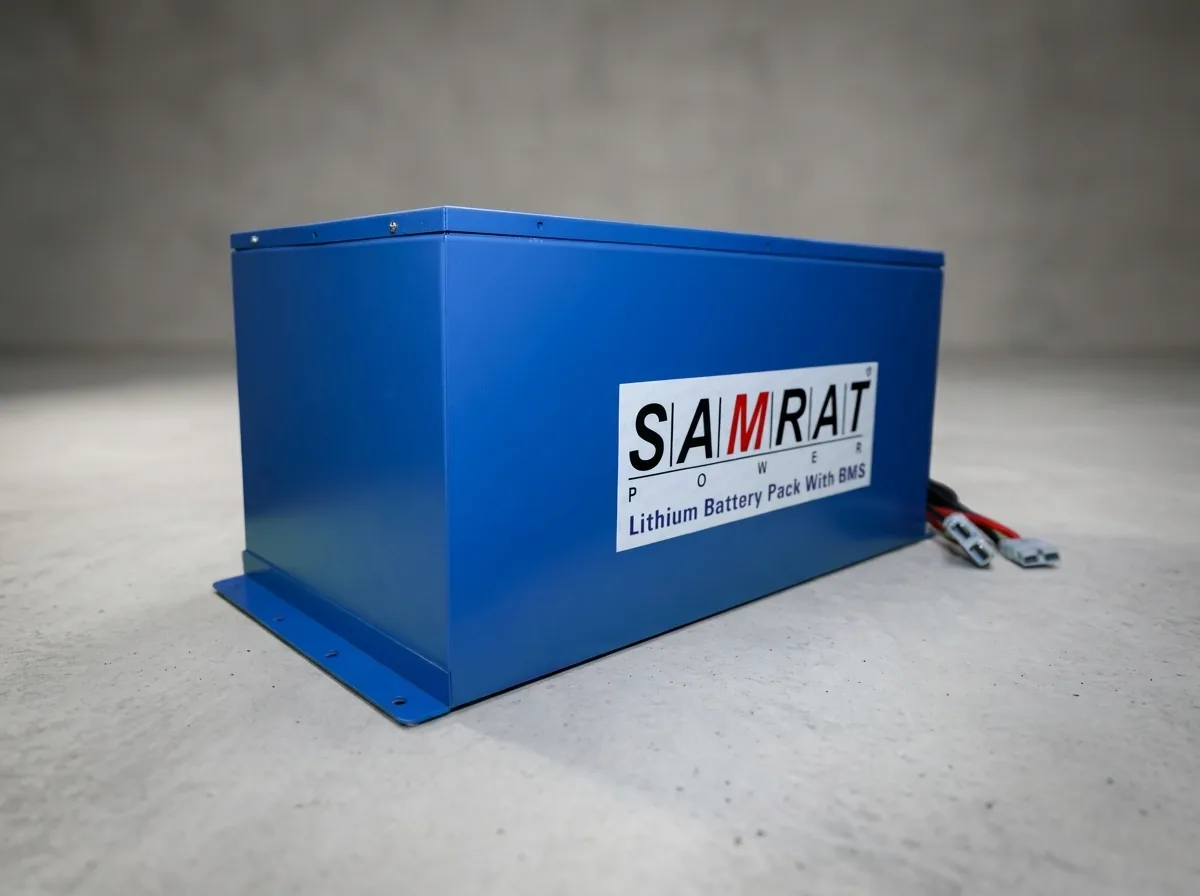
Customized Lithium Battery Pack
Named cells, a BMS specified in writing, a sealed metal enclosure and measured capacity. Built and tested in New Delhi.
Price on request · 36-month warranty
The short version
AIS 156 governs traction packs in registrable vehicles and tests the complete assembly, including whether one cell failing takes the rest with it. IS 16046 governs cells and the batteries made from them as products, through BIS registration. IS 16893 and IS 16047 sit alongside, covering traction system safety and capacity verification respectively.
The trap is assuming any of it flows downhill. It does not. Certified cells do not make a certified pack, and a test report for one configuration does not cover another. Ask whether the paperwork describes the cell or the pack, ask to see the report rather than the certificate, and ask what happens when it fails. Suppliers who build their own packs can answer all three without leaving the room.
Frequently asked questions
What is AIS 156 certification?
AIS 156 is the Indian Automotive Industry Standard covering electric powertrain vehicles, including traction battery safety requirements for L-category vehicles — two-wheelers, three-wheelers, e-rickshaws and e-carts. It tests the complete pack destructively: vibration, thermal shock, crush, fire exposure, external short circuit, overcharge, ingress and thermal propagation. It was substantially strengthened after the 2022 electric two-wheeler fires. Confirm current requirements with ARAI or BIS, as they have changed repeatedly.
Is IS 16046 the same as AIS 156?
No, and conflating them is the most common misrepresentation in this market. IS 16046 is the Indian adoption of IEC 62133 and covers the safety of cells and the batteries made from them as products, administered by BIS. AIS 156 covers the traction battery as part of a vehicle, administered under the Central Motor Vehicles Rules. A cell certificate says nothing about whether the pack assembled from those cells is safe — compliance is not transitive.
Does my e-rickshaw battery need to be certified?
If the pack propels a registrable vehicle, AIS 156 is the standard that governs it. Requirements and deadlines have changed repeatedly since 2022, so confirm the current position with ARAI, ICAT or a certification consultant rather than relying on any web page. Replacement packs for existing vehicles, stationary storage and industrial applications sit in different positions, which is worth clarifying before you commit.
What should I ask a battery supplier about certification?
Five questions, in order: is this certification for the cell or for this pack? Which cell, by make and model number? Can I see the test report rather than the certificate? What is the enclosure’s IP rating? And what does the warranty cover and what voids it? The first question is the most revealing — a supplier who answers a pack question with a cell certificate has not answered it.
What IP rating should a vehicle battery pack have?
IP65 is a sensible minimum for anything mounted on a vehicle — dust-tight and protected against water jets. The pack will see road spray, dust and at least one monsoon a year. A powder-coated metal enclosure with sealed cable glands is the appropriate construction; a plastic box with cables through a drilled hole is not, regardless of what certificate accompanies it.
What if my application does not need certification?
Specify the things the testing would otherwise have forced: named CRS-registered cells from an identifiable manufacturer, a BMS with stated continuous ratings and a low-temperature charge cut-off, an enclosure with a real IP rating, fusing independent of the BMS, measured rather than asserted capacity, and a written warranty from a company that will still exist in three years. Applications outside mandatory testing are where the poorest product tends to hide.